Guide: Find Flock Cameras in Your Area
Last Updated June 2026
Why Rural Communities Should Pay Attention
You might think license plate surveillance is a big-city problem. It's not.
Flock Safety cameras have spread quietly into small towns, rural counties, and suburban communities across America, often with little or no public announcement. Rural areas are actually harder to track, which means cameras often go up without neighbors ever knowing.
In the past year, investigations have revealed that in many communities, Flock camera data has been shared with federal immigration enforcement agencies, including ICE, CBP, and ATF, sometimes without the local police department even knowing it was happening. If your county has Flock cameras, your movement may already be part of that system. This page will help you find out.
🗺️ 1. Use the deflock.me Map
deflock.me is a free, volunteer-run interactive map that tracks known Flock camera locations using public records, press releases, and tips from community members like you.
Search by zip code or city to see if your community has Flock cameras
Click on a dot to see details like the agency name or contract date
Don't see your area? That doesn't mean you're safe — rural communities are underrepresented because fewer people have checked yet
🔗 Visit: deflock.me
Note: deflock.me only shows locations that have been reported. The next step — filing a public records request — is the most reliable way to know for sure.
👁️ 2. Look Around Your Town
Flock cameras are easy to spot once you know what to look for:
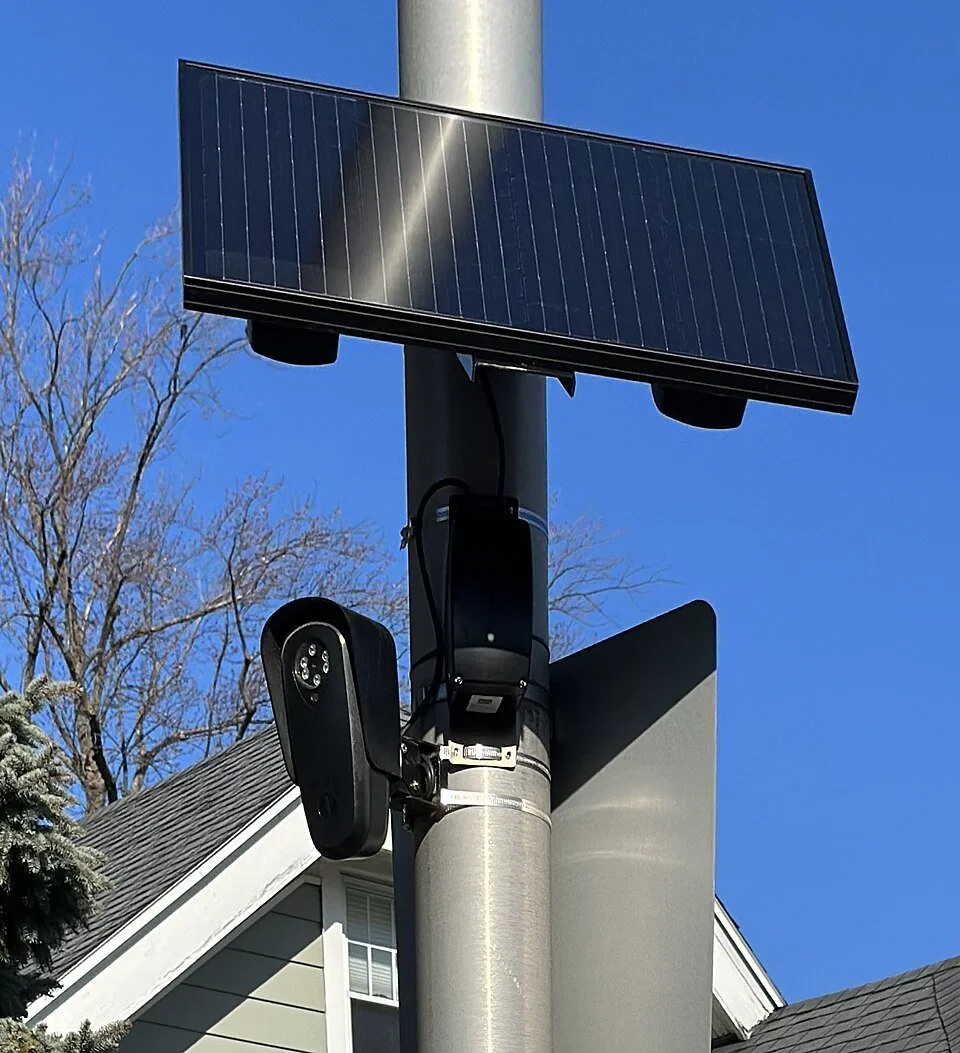
Mounted on metal poles or street signs, sometimes on existing utility poles
Often near town entrances, main intersections, or school zones
A small black camera box with a solar panel on top - Example
Sometimes paired with a small cellular antenna
Tip: You can spot these from a public road using your phone camera or binoculars. You don't need to trespass or do anything unusual, just look up.
📄 3. File a Public Records Request
This is the most powerful tool you have. Even if you can't find a camera, your sheriff's office, city police department, or county commission may still have a contract with Flock — or may be sharing your data with outside agencies.
Ask for:
The contract with Flock Safety (including the dollar amount and expiration date)
A map or list of camera locations
Audit logs of all searches, including the searching agency's name and the stated reason for the search
Whether "National Lookup" or "State Lookup" features are enabled
Whether any federal agency (including ICE, CBP, ATF, or HSI) has ever queried your local data
Why the last two matter: A feature called "National Lookup," enabled by default in many Flock contracts allows law enforcement agencies anywhere in the country, including federal agencies, to search your local camera data. Several communities only discovered federal agencies had been accessing their data after filing public records requests. One Oregon city found that federal immigration agents had searched its Flock database 279 times in just the first three weeks of its pilot program.
👉 Use our public records request template →
🧭 4. Ask at a Public Meeting
Your local government is required to hold public meetings. City council sessions, county commission meetings, and police oversight board hearings are all places where you have a right to speak.
Ask these questions:
"Has your agency installed or contracted with Flock Safety, or any other license plate reader system?"
"Who has access to that data — including any federal agencies?"
"Is the National Lookup feature enabled on your system?"
"Has any federal immigration enforcement agency — ICE, CBP, or Border Patrol — ever searched our local data?"
"What is your data retention policy? How long is our data stored?"
You don't need to be an expert. Showing up and asking questions creates a public record — and lets your elected officials know that residents are paying attention
⚠️ What to Know: New Concerns About Flock Data Sharing
This section covers recent developments that may affect your community.
Federal agencies have been accessing local Flock data
Multiple investigations in 2025 and 2026 found that federal agencies — including ICE, Customs and Border Protection, ATF, and Homeland Security Investigations — accessed local Flock camera data in communities that had not explicitly authorized it. (Virginia Center for Investigative Journalism) (University of Washington Center for Human Rights) In some cases, this happened because of a feature called "National Lookup," which allowed any agency in Flock's national network to search a local department's data. Many local police departments didn't realize this feature was enabled, or didn't understand that enabling it was a two-way door. (Bend Source) (Rain Intelligence / Mountain View disclosure) This matters for rural communities because: Rural counties often signed Flock contracts with minimal public debate Smaller agencies may have less technical staff to audit their own settings Rural roads and town entrances — common Flock camera locations — can effectively track everyone who enters or leaves a small community
Cameras are being used for more than crime
Flock cameras are sold as crime-fighting tools, but investigations have found them used for things like checking whether families live within a school district boundary, tracking protesters, and building location histories on people who are not suspected of any crime. Before your community signs a contract, it's worth asking: what exactly will these cameras be used for, and who decides?
Communities are pushing back — and winning
Since early 2025, more than two dozen cities and counties have canceled or rejected Flock contracts, including Austin, TX; Eugene, OR; and Denver, CO — where the city council rejected a new Flock contract unanimously. Several California cities, including Mountain View and Santa Cruz, terminated their contracts after discovering federal agencies had accessed their data without authorization. (State of Surveillance) Washington State passed a new law in March 2026 restricting how ALPR data can be stored and shared, and limiting its use for immigration enforcement. Several other states are considering similar legislation.
Check out our Atlas of Resistance to find out who else is fighting back, or to add your town.